Gold IRA vs Silver IRA: Understanding the Difference and Which to Choose
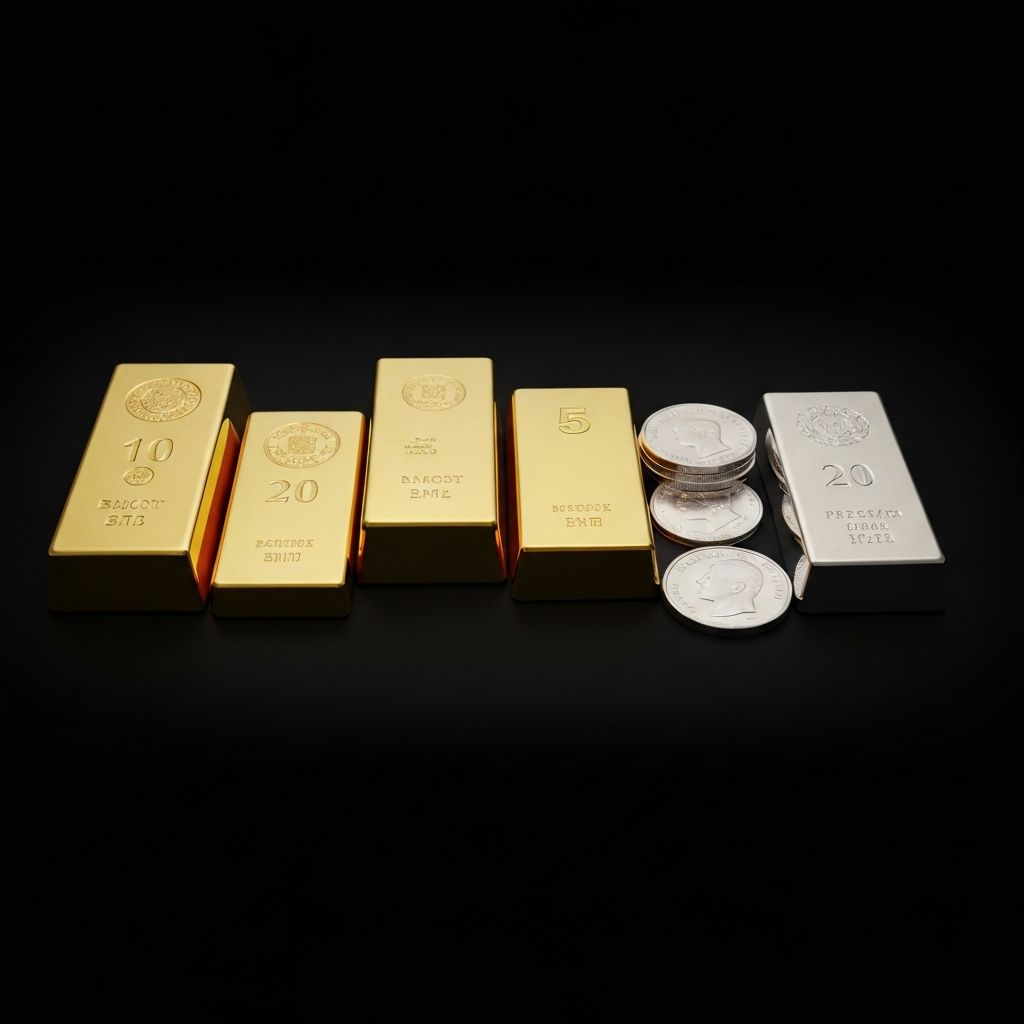
When considering precious metals for your retirement portfolio, you'll quickly encounter the choice between gold and silver IRAs. The good news? Most self-directed precious metals IRAs allow you to hold gold, silver, platinum, and palladium together in one account. You're not limited to a single metal, and many advisors recommend diversifying across multiple precious metals for optimal portfolio balance.
First, let's clarify that 'Gold IRA' and 'Silver IRA' are somewhat misleading terms. In reality, most self-directed precious metals IRAs allow you to hold gold, silver, platinum, and palladium together in one account. You're not limited to a single metal, and many advisors recommend diversifying across multiple precious metals for optimal portfolio balance.
Both metals have delivered exceptional returns in 2025. Gold has posted a remarkable 55-58% year-to-date gain, reaching an all-time high of $4,381 per ounce in October 2025 and trading around $4,210 in December. Silver has been even more explosive, surging over 120-140% year-to-date to reach a fresh all-time high of $70.66 per ounce in December 2025, currently trading around $69.35.
The performance difference highlights a key characteristic: silver is significantly more volatile than gold. While gold is known for steady appreciation and wealth preservation, silver tends to experience sharper price swings in both directions. This volatility can work in your favor during bull markets but requires stronger risk tolerance.
Gold has long been viewed as the premier store of value and safe-haven asset. During times of economic uncertainty, inflation concerns, or geopolitical tensions, investors flock to gold for stability. It maintains purchasing power across centuries and is less correlated with stocks and bonds, making it an excellent portfolio diversifier.
Gold's lower volatility makes it easier to hold through market cycles. It's highly liquid globally, easy to sell quickly, and widely accepted. For retirees or those approaching retirement who prioritize capital preservation over aggressive growth, gold typically forms the larger allocation within a precious metals portfolio.
Silver, meanwhile, serves a dual role as both an investment asset and an industrial commodity. Approximately 50% of silver demand comes from industrial applications, particularly in electronics, solar panels, electric vehicles, and medical equipment. This industrial demand creates additional price support beyond investment demand.
The industrial component makes silver more economically sensitive than gold. During periods of economic expansion and technological growth, silver demand increases from both industrial users and investors, potentially driving prices higher. This is why silver typically outperforms gold during economic recoveries and bull markets.
Silver's lower price point per ounce offers interesting advantages. At current prices, you can accumulate more ounces of silver than gold with the same dollar investment. If both metals appreciate by similar percentages, your silver position represents more physical ounces, which some investors find psychologically satisfying.
The gold-to-silver ratio—the number of silver ounces needed to buy one ounce of gold—provides insight into relative value. Historically, this ratio averages around 60:1. When the ratio rises above 80, silver is considered undervalued relative to gold. In late 2025, with gold at $4,210 and silver at $69, the ratio sits around 61:1, near historical averages.
Analysts view silver's dual investment and industrial demand as creating strong growth potential. The global push toward renewable energy, particularly solar panel production which uses significant silver, is expected to increase industrial demand through the decade. Combined with investment demand, this creates a compelling case for silver inclusion in precious metals portfolios.
However, silver's higher volatility means larger price swings. While it delivered 140% gains in 2025, it has historically experienced sharp corrections during market downturns. Silver dropped more severely than gold during the 2008 financial crisis and in various market corrections, though it also tends to rebound more aggressively during recoveries.
Storage considerations slightly favor gold due to its higher value-to-weight ratio. $50,000 worth of gold occupies much less space than $50,000 worth of silver, potentially reducing storage costs. However, most IRS-approved depositories charge similar rates for both metals, so this difference is minimal for IRA holdings.
So what do analysts recommend? The consensus points toward a balanced approach using both metals rather than choosing one exclusively. Most precious metals analysts suggest allocating 60-80% to gold and 20-40% to silver within your precious metals allocation for optimal diversification.
This balanced approach provides gold's stability and wealth preservation characteristics while capturing silver's growth potential and industrial demand drivers. During market uncertainty, gold provides ballast. During economic expansion, silver offers explosive upside. Together, they create a more robust precious metals position than either alone.
Your specific allocation should consider several factors: age and retirement timeline, overall portfolio composition, risk tolerance, investment goals, and market conditions. Younger investors with longer time horizons might tilt more heavily toward silver for growth potential. Those nearing or in retirement might prefer gold's stability with a smaller silver allocation.
Some investors use a tactical approach, adjusting their gold-to-silver ratio based on market conditions. When silver appears undervalued (high gold-to-silver ratio), they increase silver allocation. When silver has run significantly, they rebalance toward gold. This active management requires market monitoring but can potentially enhance returns.
The practical reality is that most precious metals IRA companies make it easy to hold both. When you fund your precious metals IRA, you simply specify what percentage you want in gold versus silver. Companies like Noble Gold, American Hartford Gold, and Augusta Precious Metals all facilitate multi-metal IRAs with no additional complexity.
Important note: all metals in your precious metals IRA must meet IRS purity standards. Gold must be 99.5% pure, and silver must be 99.9% pure. Approved products include American Eagles, Canadian Maple Leafs, Austrian Philharmonics, and various bars from approved refiners. Your IRA company will guide you toward compliant products.
From a tax perspective, gold and silver receive identical treatment within an IRA structure. Both grow tax-deferred in traditional IRAs or tax-free in Roth IRAs. The tax advantages of holding precious metals in an IRA—avoiding the 28% collectibles tax rate on gains—apply equally to both metals.
Looking ahead, both metals appear positioned for continued strength. Goldman Sachs forecasts gold surpassing $4,500 in 2026. Silver analysts point to growing industrial demand, particularly from the renewable energy sector, as supporting higher prices. The fundamental drivers supporting precious metals—inflation concerns, geopolitical tensions, central bank buying—benefit both gold and silver.
The record-breaking performance of both metals in 2025 validates the case for precious metals diversification. While past performance doesn't guarantee future results, the structural factors supporting precious metals remain firmly in place entering 2026.
For most investors, the question shouldn't be 'gold or silver' but rather 'what mix of gold and silver best suits my goals.' By holding both in a single precious metals IRA, you capture gold's stability and silver's growth potential while maintaining the tax advantages and professional storage security that IRAs provide.
Ready to Start Your Gold IRA Journey?
Compare our top-rated Gold IRA companies and find the perfect partner for your retirement investment.
View Top Companies